Pay per pupil · Unlimited teachers · Moldova-first platform. See pricing
How preparing on EduRol works
Start with a first paper, for free
A pupil account is free and comes with 450 credits, enough for a whole AI-made paper. No card.

In short
On EduRol a pupil solves free tests with marking schemes from the library with no account, and with a free pupil account asks for new AI-made papers on topics picked from the Moldovan curriculum. One model writes the paper, a model from another family re-solves the items with a single right answer, and a third reviews it; the pupil solves it online, timed or not, or on paper from photos, and gets it marked against the scheme. Mistakes go into a notebook, and topics are coloured on a map by how well they are known. The simulations are unofficial examples, for practice only; they are not official MEC papers.
The steps
Make a free account
With Google or email, with a school or without one. You get 450 credits, enough for a first AI-made paper. The library tests need no account at all.
- Under 14? You start with the free part straight away; more credits and photos of your work need a parent's consent.
- In grades 1–4 a parent makes the child's profile.
Pick what to practise
The grade, subject, kind of paper — unit test, semester test, grade 4 testing, grade 9 exam or BAC — and the topics from the Moldovan curriculum, or your own. You see the cost in credits before you start.
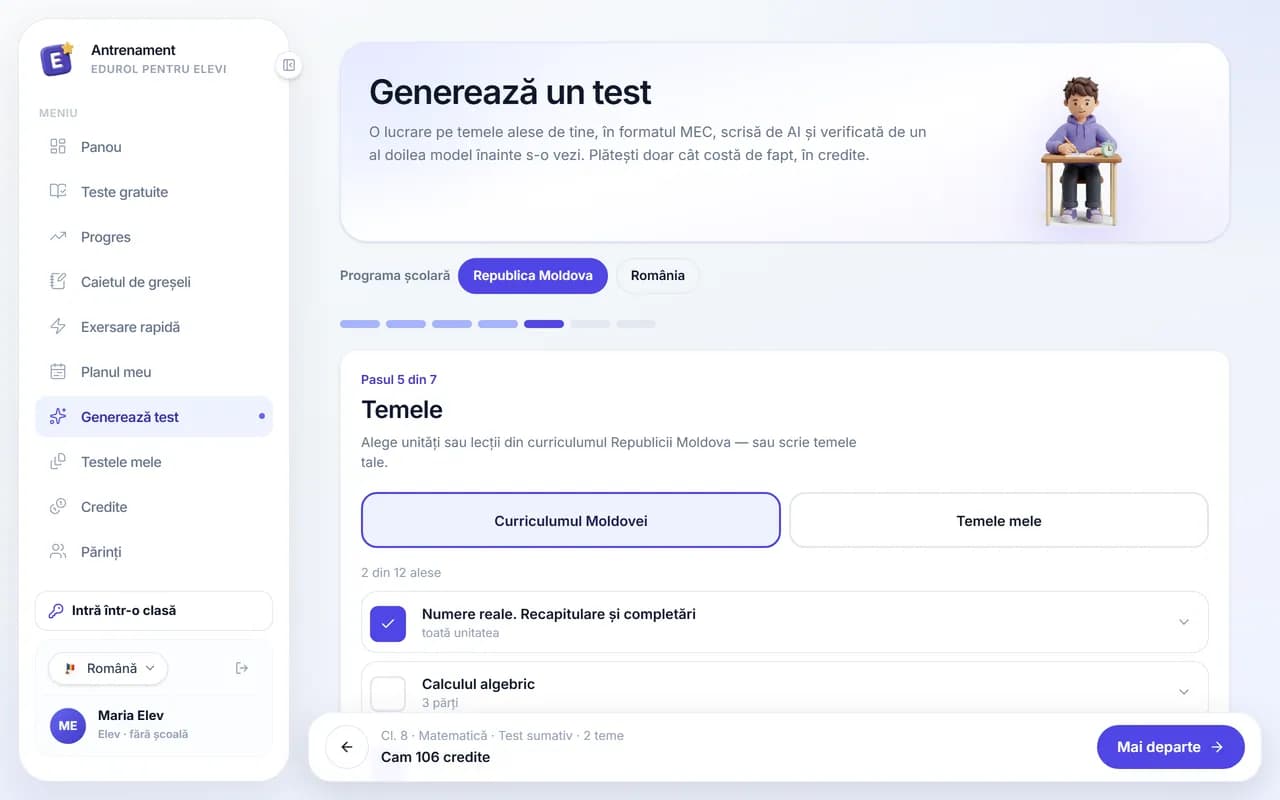
The EduRol test generator: topics picked from the curriculum and the cost in credits, before generating The AI makes the paper, another model checks it
One model writes the paper with a marking scheme, a model from another family re-solves every item with a single right answer, and a third reviews it. If they disagree on the key, you get no paper and pay nothing. It is usually ready in a few minutes.
Solve it online or on paper
Online as practice, with hints that cost points on the item (not credits), or as a simulation, with no hints, in the exam's time. Or on paper: print it with the answer sheet, write by hand and photograph the pages.
Get it marked against the scheme
Choices and numbers are marked by the program, for free. Written answers and photos are marked by AI against the scheme; a photo that cannot be read is never marked wrong.
- Disagree with an item? Contest it: a stronger model re-marks it and never lowers your mark.
- Found a wrong item? Report it; if you are right, it is voided and its share of the credits comes back.
- You can also ask a partner teacher to check it (300 credits).
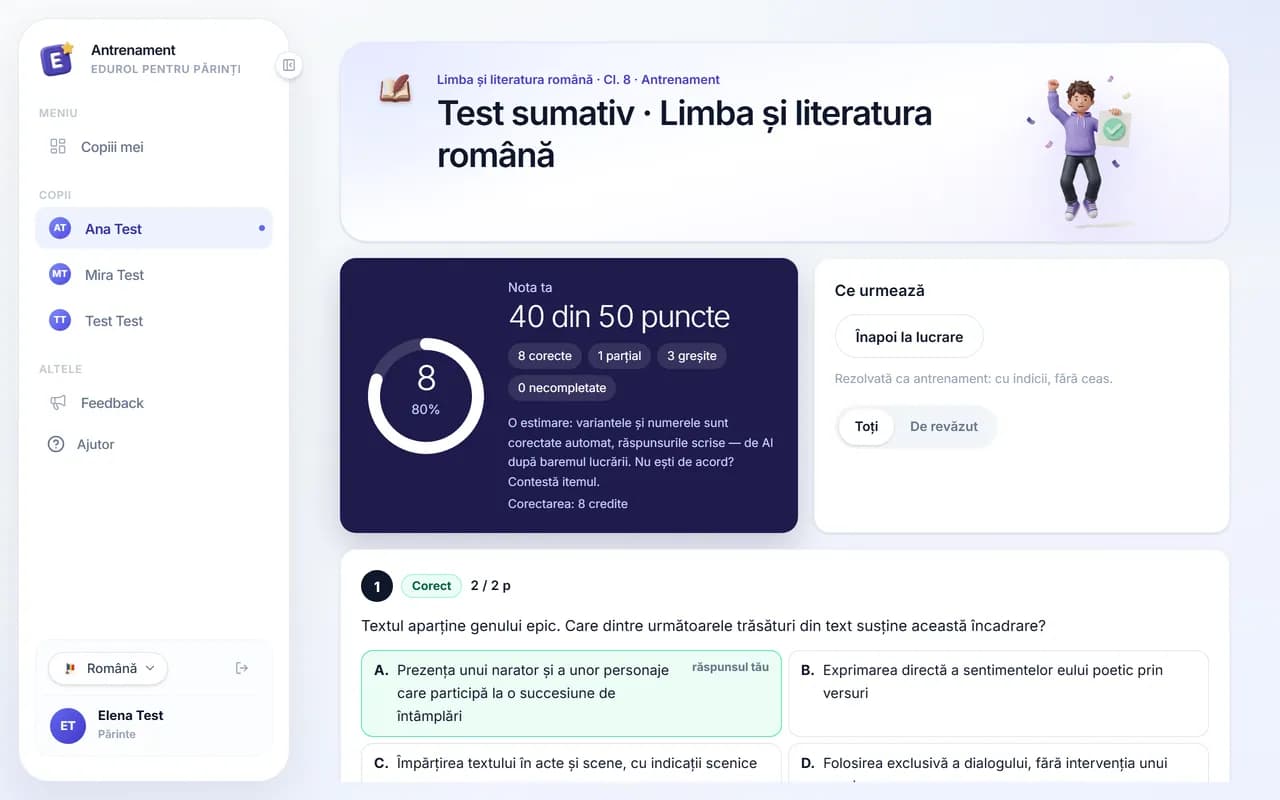
A solved and marked unit test: the mark, the points and every item See what to revise
Mistakes go into the notebook. Topics are coloured on a map — mastered, in progress, needs work — and come back for review after 7, 21 and 60 days. Quick practice on already-checked items is free, and if you add an exam date you get a week-by-week plan.
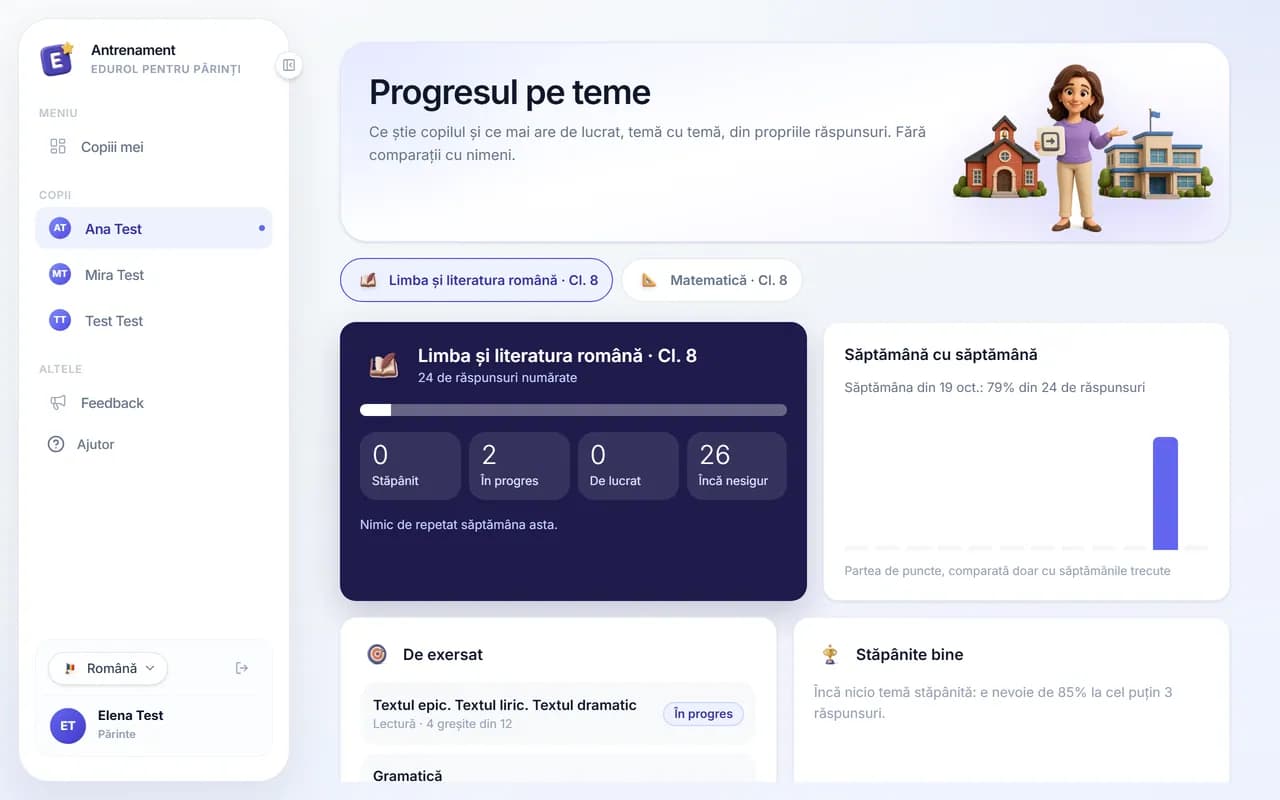
The topic map: what is mastered, in progress and to review A parent alongside
You link a parent with an 8-character code. They see the same map and the solved papers, top up credits, set a monthly limit, approve papers above it and get an email about your week. They never compare you with anyone.
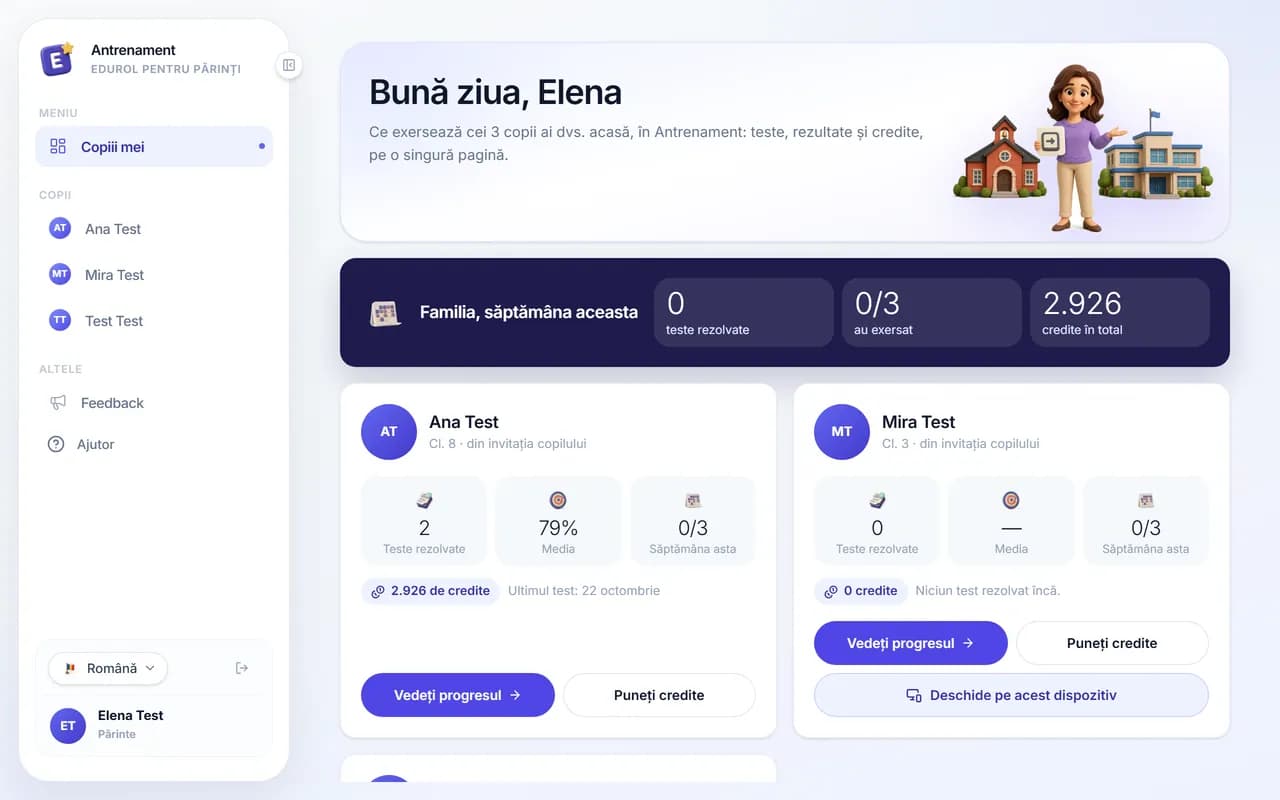
The parent's page: each child with their tests, average and credits
The screenshots show the Romanian interface; it can be switched to English or Russian.
What it costs
- The library tests are free, with no account and no limit.
- A pupil account is free and comes with 450 credits — enough for a first AI-made paper of any kind, an exam simulation included.
- A new unit test usually costs about 120 credits; 10 credits = 1 MDL. You see the exact cost before you start and pay only for what the AI actually did.
- Multiple-choice and numeric answers, hints and quick practice use no credits; marking written answers usually costs a few credits.
- A pupil never pays: more credits are bought by a parent, from 100 MDL, from a link the child sends — no parent account needed.
The simulations are unofficial examples
EduRol's simulations are made by EduRol from the exam programmes and the exams' public structure. They are unofficial examples, for practice only; they are not official MEC papers: they do not come from Moldova's Ministry of Education and Research or from ANCE and are not endorsed by them. The official papers of past sessions, with their marking schemes, and practice tests are on ANCE's website.
Questions
- Do I need a school to use EduRol?
- No. Any pupil can make a free account and choose "continue without a school". A pupil whose school uses EduRol finds the same practice in their own menu.
- How do I know the marking scheme's answers are right?
- Every item with a single right answer is re-solved by an AI model from another family; if the key is still disputed, the paper is not delivered and you pay nothing. If you still find a mistake, report the item: if you are right, it is voided and its share of the credits comes back.
- What happens to the photos of my work?
- They are kept private: only the pupil and the parents linked to them can see them. A pupil under 14 can send photos once a parent has agreed.
- Are the simulations real exam papers?
- No. EduRol makes them on the exams' public structure. The simulations are unofficial examples, for practice only; they are not official MEC papers. The official papers of past sessions are on ANCE's website.
- What does it cost?
- The library tests are free and need no account. A pupil account is free and comes with 450 credits, enough for a first AI-made paper of any kind. A new unit test usually costs about 120 credits (10 credits = 1 MDL), and you see the exact cost before you start. More credits can only be bought by a parent, from 100 MDL; a pupil never pays.